TI-SKIN® Product Family
TI-SKIN® MARINE
Phase-change thermal insulation engineered for the marine environment. Lightweight, humidity-resistant, and salt-proof — designed for yachts, cruise ships, cargo vessels, and naval units.
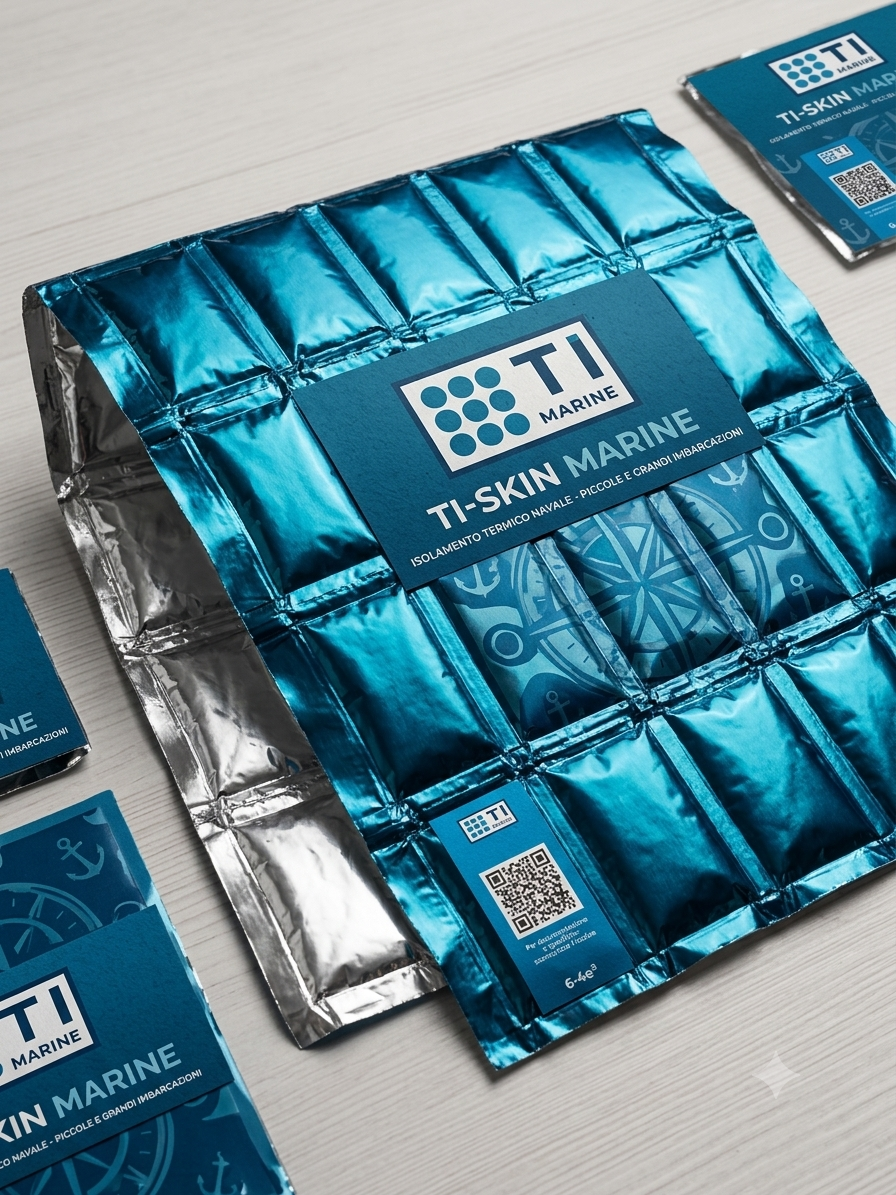
Phase-change thermal insulation engineered for the marine environment. Lightweight, humidity-resistant, and salt-proof — designed for yachts, cruise ships, cargo vessels, and naval units.
Naval and maritime structures operate in one of the most thermally hostile environments on earth. Engine rooms reach 60–80°C while exterior hull surfaces are exposed to seawater at 5–18°C. Solar radiation on deck superstructures can drive surface temperatures above 70°C in tropical waters. Conventional rock wool and foam insulation — heavy, moisture-absorbent, and static — fails to address these extreme thermal gradients efficiently.
Every kilogram of unnecessary insulation is fuel consumed to move it across the ocean. Every inefficient thermal barrier means the onboard generator runs longer, burning diesel and producing CO₂. In the marine sector, thermal performance and weight are inseparable from operating economics.
When solar radiation or engine heat drives surface temperatures toward the PCM melt point, the material undergoes a phase transition — absorbing large quantities of thermal energy as latent heat without allowing temperature to rise. This peak-shaving effect reduces the thermal load transferred to interior spaces by up to 60%.
As temperatures drop — at night, in port, or when moving into cooler waters — the PCM solidifies and releases its stored energy outward. The panel is fully recharged for the next thermal cycle, with no electricity, no moving parts, and no maintenance required. This cycle repeats thousands of times over the product's lifetime.
TI-SKIN® MARINE weighs 4.2–4.8 kg/m² versus 10–14 kg/m² for conventional marine rock wool — a critical advantage for vessel stability, fuel efficiency, and payload capacity.
By absorbing thermal peaks and stabilizing interior temperatures, TI-SKIN® MARINE significantly reduces the runtime of air conditioning and climate systems — directly cutting diesel generator consumption.
The inorganic PCM (hydrated salts) is fully sealed in a high-reflectivity aluminum/polymer laminate — impermeable to seawater spray, condensation, and salt air. No swelling, no degradation, no mold risk.
The laminated flexible panel withstands continuous mechanical vibration from engines and hull stress — maintaining structural integrity through thousands of thermal and mechanical cycles.
Physical format (all models): 1.2 cm × 48 cm × 122 cm. Self-adhesive installation — no adhesives, no fumes, no machinery. Compatible with aluminum, fiberglass, and composite hull materials.
In naval engineering, weight is cost. Excess insulation mass increases fuel consumption, reduces speed, lowers payload capacity, and affects vessel stability. TI-SKIN® MARINE delivers superior thermal performance at a fraction of the weight of conventional solutions.
A 200 m² insulation area on a mid-size yacht — cabins plus superstructure — represents a weight difference of over 1,100 kg between conventional rock wool and TI-SKIN® MARINE. That is over a metric ton of dead weight eliminated, with better thermal performance and zero maintenance cost over the vessel's lifetime.
| Material | Weight (kg) | Thickness |
| TI-SKIN® MARINE | 450 kg | 1.2 cm |
| Marine Rock Wool | 1,000–1,400 kg | 5–8 cm |
| Polyurethane Foam | 500–700 kg | 4–6 cm |
| Glass Wool (marine) | 800–1,100 kg | 5–7 cm |
Fuel Impact: A 1,000 kg weight reduction on a 30 m motor yacht at cruising speed of 12 knots reduces fuel consumption by approximately 3–5% annually — equivalent to thousands of euros in operating cost savings over a season.
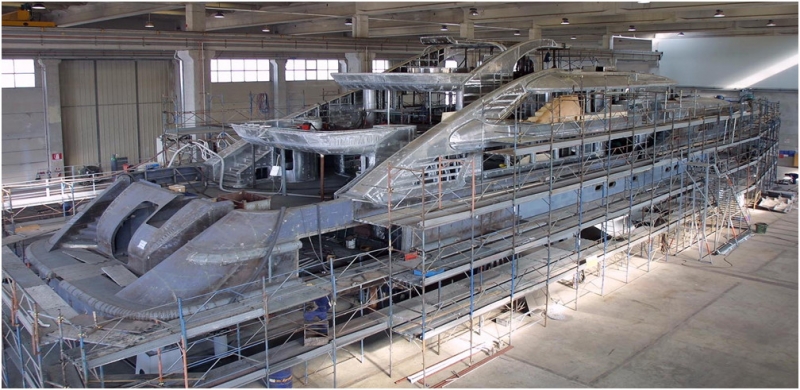
TI-SKIN® MARINE is designed for both new construction and retrofit applications. In shipyard settings, panels are installed directly onto hull frames and bulkheads before interior finishing. For existing fleets, the self-adhesive 1.2 cm format allows installation without removing existing structures, without machinery, and without vessel downtime longer than standard refit windows.
TI-SKIN® MARINE is currently available for OEM partnerships, prototype installations, and shipyard pilot projects. Contact our team to discuss technical specifications, panel sizing, and certification requirements for your vessel class.