The modular power plant that turns municipal solid waste into heat and electricity — no flame, no smoke, no landfill. The residue is an inert white ash; metals go back to industry.
Slow oxidation in oxygen deficiency, then complete combustion of the gas at 1000 °C: about 80% of the waste's energy recovered.
18 MWt / 4 MWeper single module
from 1 t/day to 5 t/hany size; an industrial module treats over 40,000 t/year
~80%of the waste's energy recovered
0flame · smoke · process water
The technology
Two chambers, one principle
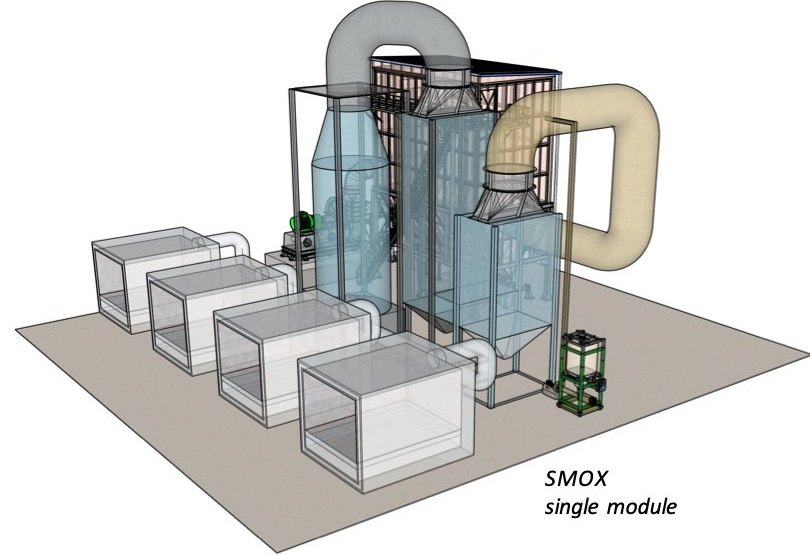
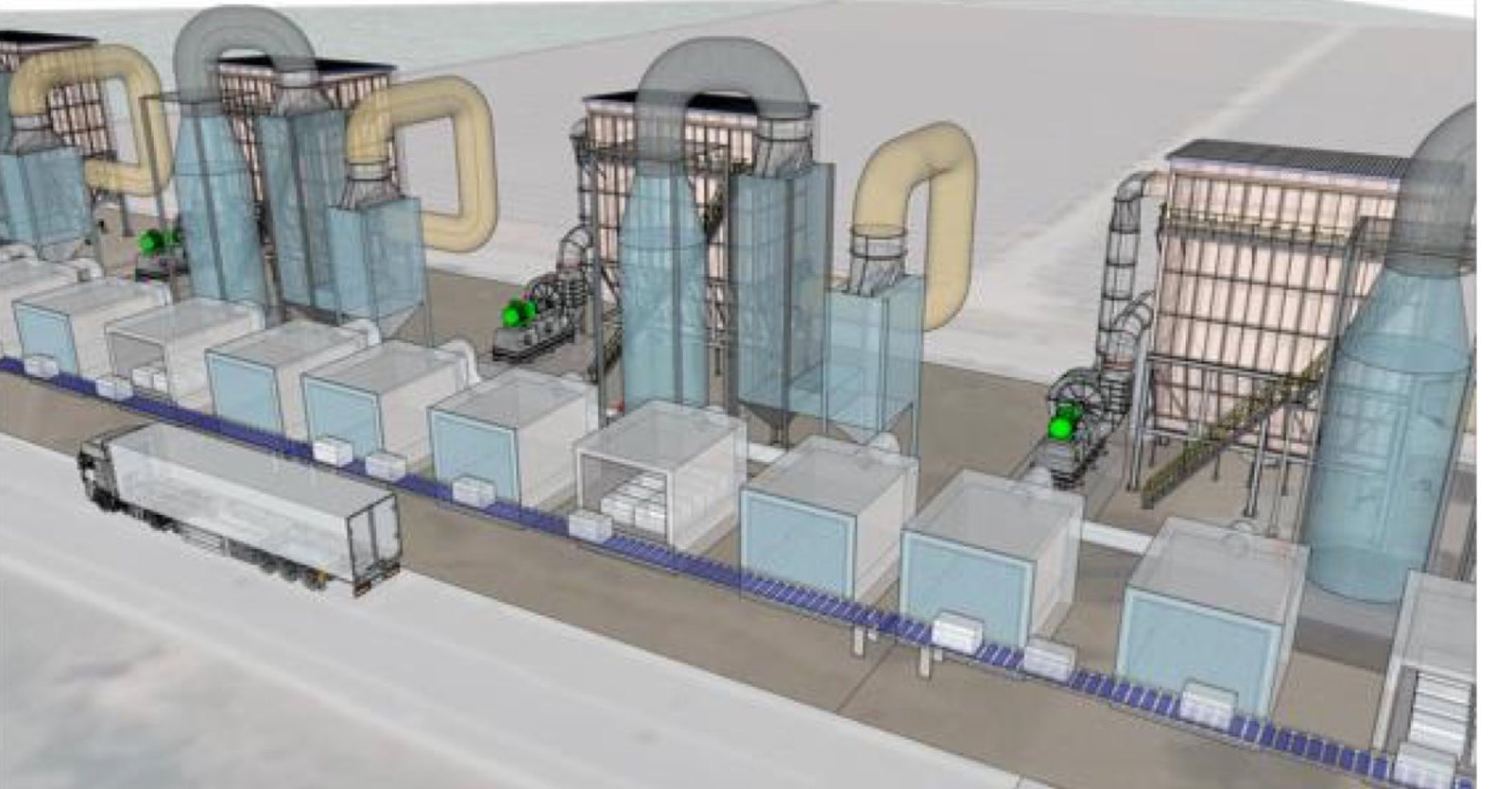
The waste needs no pre-treatment: it enters the smoldering cell, where a slow oxidation in oxygen deficiency, between 300 and 600 °C, produces a clean combustible gas. The gas moves into the oxidation chamber and burns completely at 1000 °C for more than two seconds with excess oxygen: CO, dioxins, furans and volatile organic compounds are destroyed. Heat is recovered in the boiler; flue gases pass through the acid-gas reactor, the bag filter and the cyclone. What remains is a carbon-free white ash, with metals separated.
Loading
Waste enters as it is: no screening, no homogenization.
Smoldering cell
300–600 °C, oxygen below 50%: slow, flameless oxidation for over 12 hours. No dust lifting, no metal vapours.
Oxidation chamber
The gas burns at 1000 °C for > 2 seconds with excess oxygen: CO, dioxins, furans and VOCs destroyed.
Heat recovery
Boiler: heat at 300 °C or steam for the turbine. Flue gas at 180 °C.
Filtering
Acid-gas reactor with lime, bag filter, agglomeration cyclone, SNCR for NOx.
Inert ash
White, carbon-free, with metals separated and recovered.
1 MWhenergy contained in 300 kg of waste
850 kWhheat recovered at 1000 °C
250 kWhe + 750 kWhtfrom 1 MWh thermal in cogeneration
From heat to electricity
The turbine unit
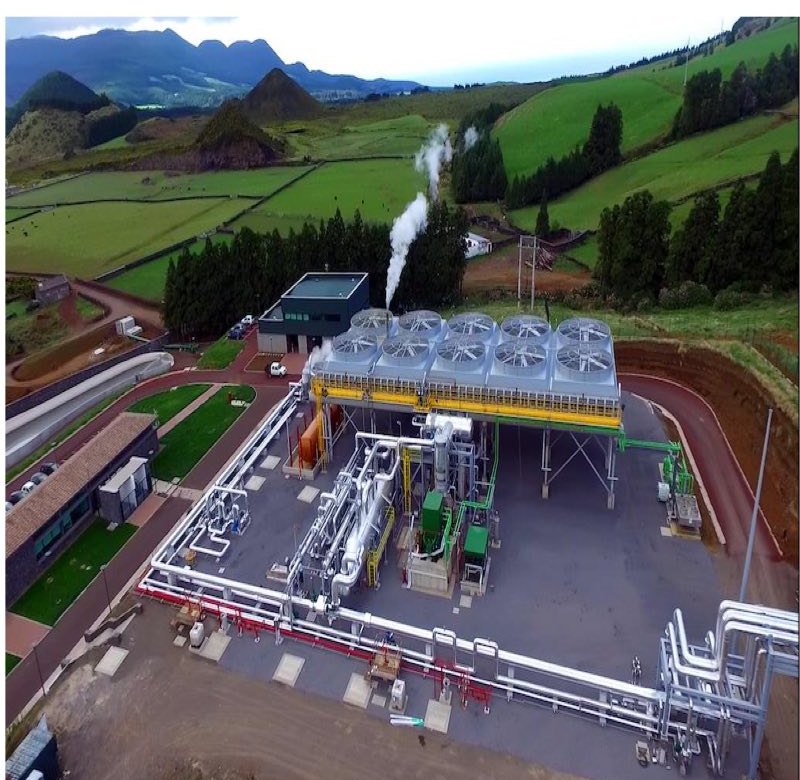
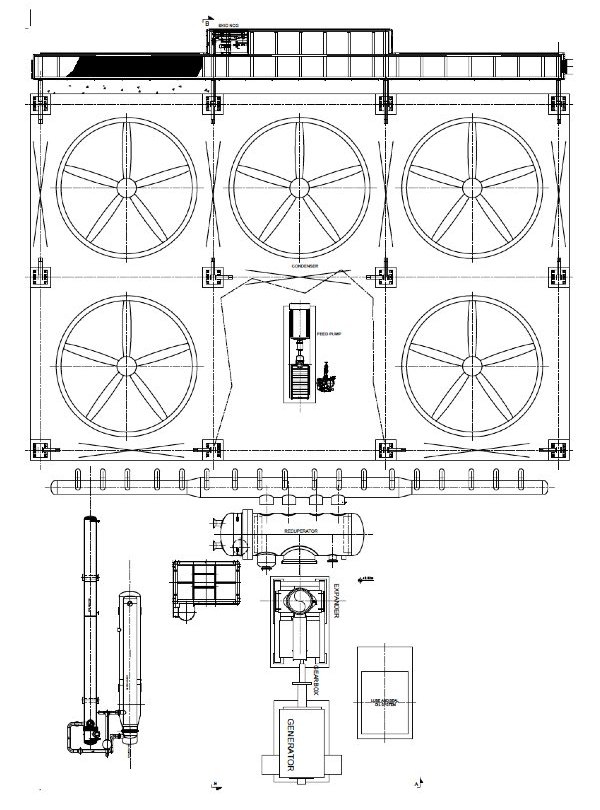
The heat recovered in the boiler drives an ORC turbine (organic Rankine cycle, supplied by Turboden – Mitsubishi) with an air-cooled condenser: no cooling tower, no water consumption. From 1 MWh thermal come 250 kWh electric and 750 kWh thermal at 40 °C, usable for district heating, greenhouses or processes.
ORC plant with air-cooled condenserTurbine unit layout: condenser, regenerator, expander, generator
The advantages
Why SMOX is not an incinerator
No pre-treatment
Waste enters as received; no sorting lines, no homogenization.
Self-sustaining process
Once started, the process feeds itself. The initial pre-heating comes from a photovoltaic system.
No process water
The moisture in the waste passes through the system as vapour and is treated in the filters.
No odours
Areas holding municipal waste are kept in slight depression: nothing is perceived outside the plant.
Modular and flexible
Sized from about 1 tonne a day up to large industrial modules; every plant runs efficiently between 25% and 110% of nominal capacity and modules add up.
8,400 hours a year
Guaranteed availability, with excess capacity spread across plant sections. Lifetime ≥ 20 years.
Independent safety
A separate, UPS-powered computer monitors temperatures, fire sensors, emissions and noise and puts the plant in a safe state.
Energy independent
In normal operation the plant needs no grid supply: it produces the electricity it consumes and exports the rest.
Emissions
Far below the European limits
The strategy is to prevent pollutants from forming, not to filter them afterwards. Low oxygen and low temperatures in the cell avoid fuel NOx and metal vapours; burning the gas at 1000 °C with excess oxygen destroys CO, dioxins and furans; the whole process stays below the 1200 °C of thermal NOx.
Pollutant
Unit
EU limit — Dir. 2010/75
SMOX (from MSW)
How SMOX avoids it
Particulate
mg/Nm³
10
< 0,5
oxygen deficiency in the smoldering chamber
CO
mg/Nm³
50
< 10
excess oxygen in the boiler at a final temperature of 180 °C
TOC
mg/Nm³
10
< 1
excess oxygen in the oxidation chamber, > 900 °C for > 2.5 s
PCDD/F (dioxins/furans)
ng/Nm³
0,1
not detectable
no formation conditions in the process
Hg
mg/Nm³
0,05
not detectable
boiler at a final temperature of 180 °C
Cd + Tl
mg/Nm³
0,05
not detectable
temperature < 600 °C in the smoldering chamber
Metals
mg/Nm³
0,5
not detectable
temperature < 600 °C in the smoldering chamber
HCl
mg/Nm³
10
< 2
de-acid gas reactor at 180 °C, > 3 s, 3× excess lime
HF
mg/Nm³
1
< 0,2
de-acid gas reactor at 180 °C, > 3 s, 3× excess lime
SO₂
mg/Nm³
50
< 10
de-acid gas reactor at 180 °C, > 3 s, 3× excess lime
NOx
mg/Nm³
200
< 10
very low formation conditions in the process
NH₃
mg/Nm³
10
< 0,2
SNCR at > 950 °C
Source: SMOX technical documentation, rel. 2.1, June 2025.
The module and the reference plant
From 1 tonne a day to a 12 MW plant
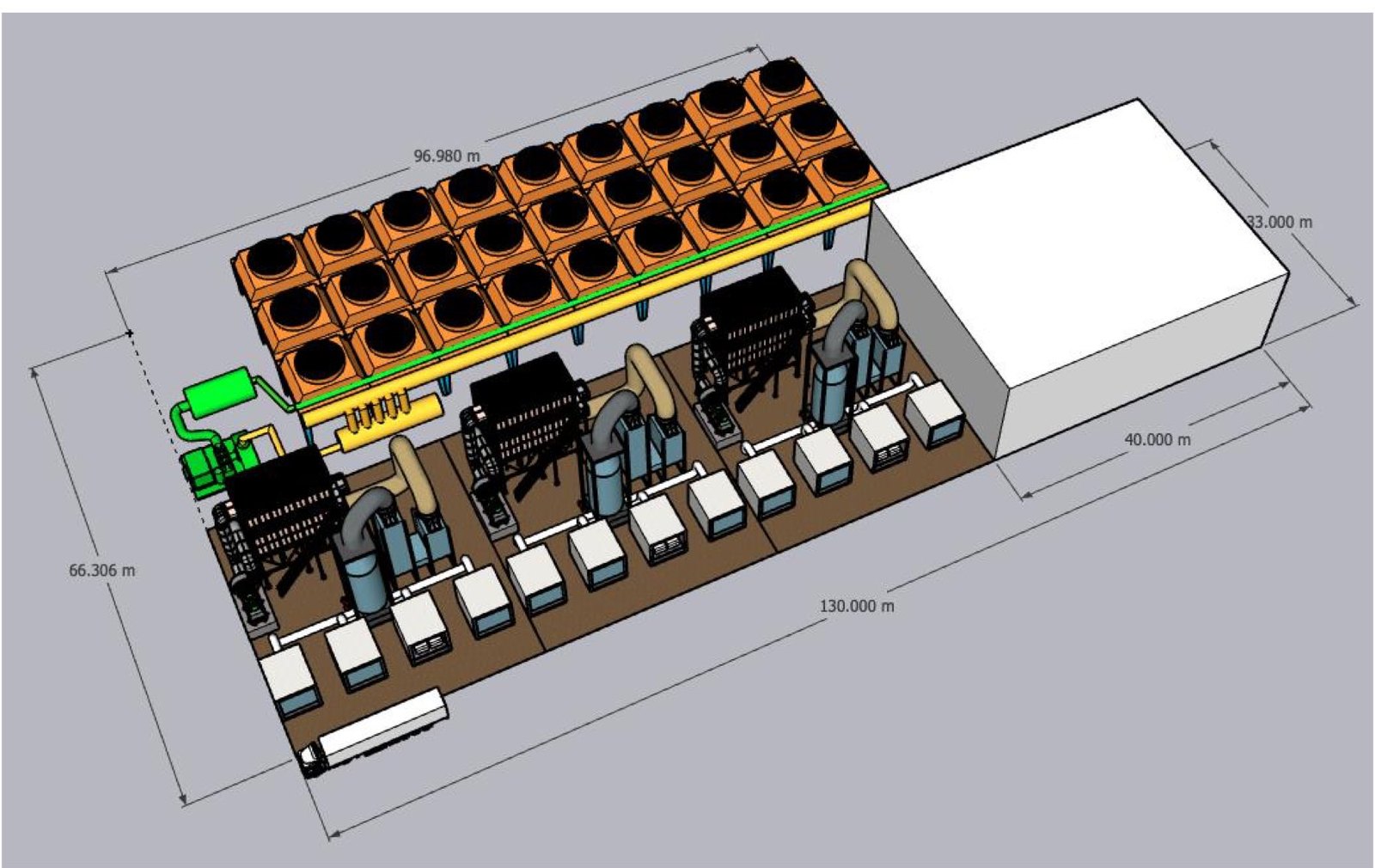
SMOX comes in every size: the smallest units treat about 1 tonne a day, for islands, villages, resorts and remote facilities. The industrial module — cell, oxidizer, filter — treats 5 tonnes per hour of municipal waste (heating value 3.6 kWh/kg) and delivers 18 MW thermal, or 4 MW electric with an ORC turbine. The three-module reference plant is the design benchmark for a territory producing 110,000 tonnes a year.
SMOX modules
3
Thermal power input
54 MW (maximum)
Electric generator
12 MW gross at the turbine
Treatment capacity
110,880 t/year (about 300 t/day)
Technological area
7,320 m² — 3 modules + turbine with air cooler
Plant footprint
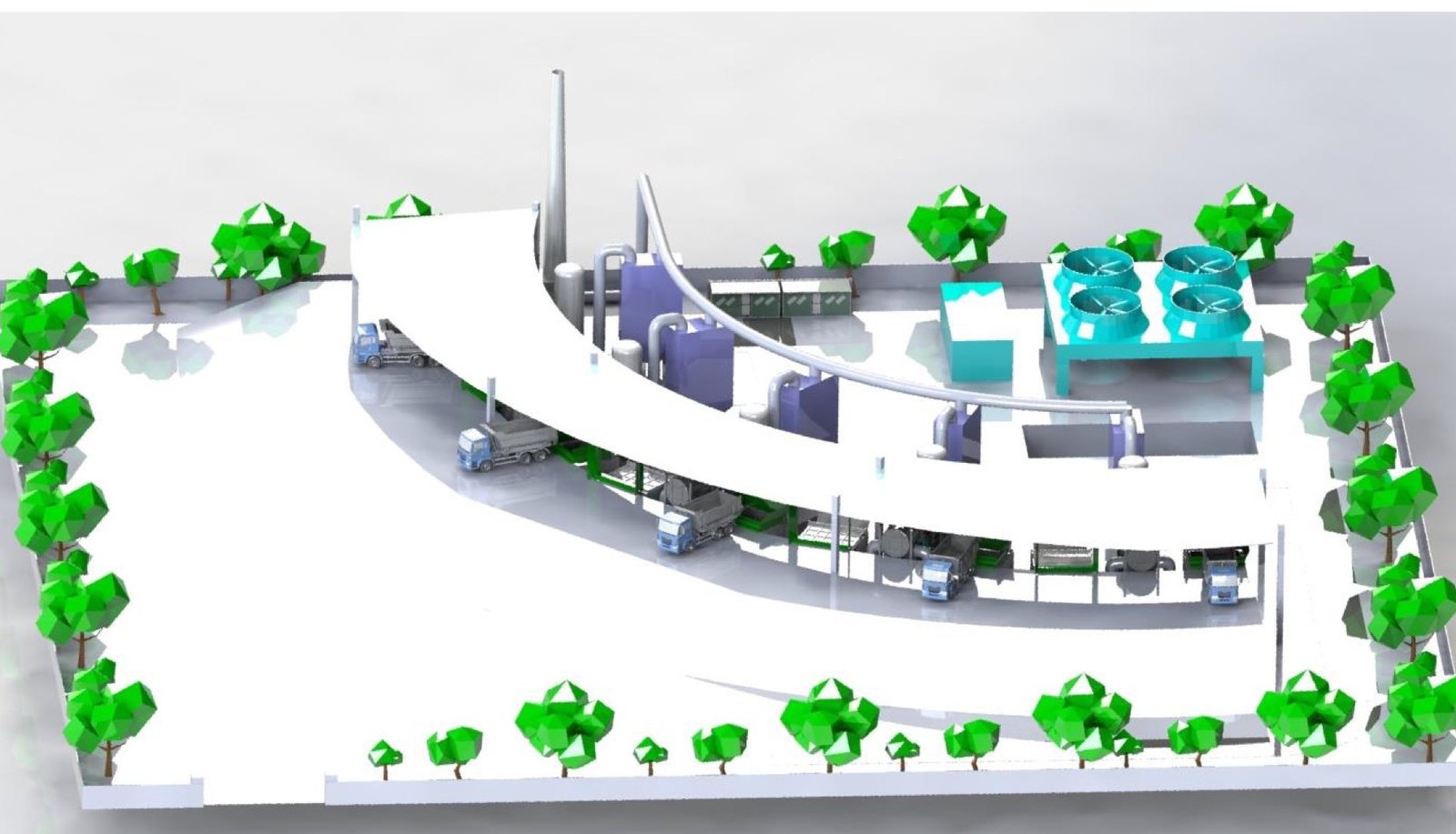
9,491 m² of buildings on about 28,000 m² fenced
Operation
8,400 h/year, 350 days; 25–110% of nominal
Staff
27 people on 24-hour shifts
Lifetime
no less than 20 years with scheduled maintenance
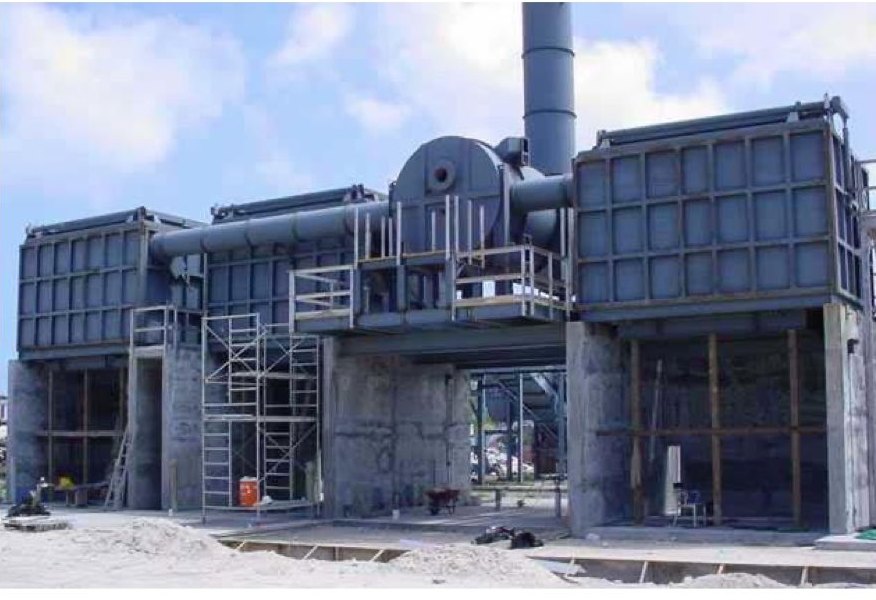
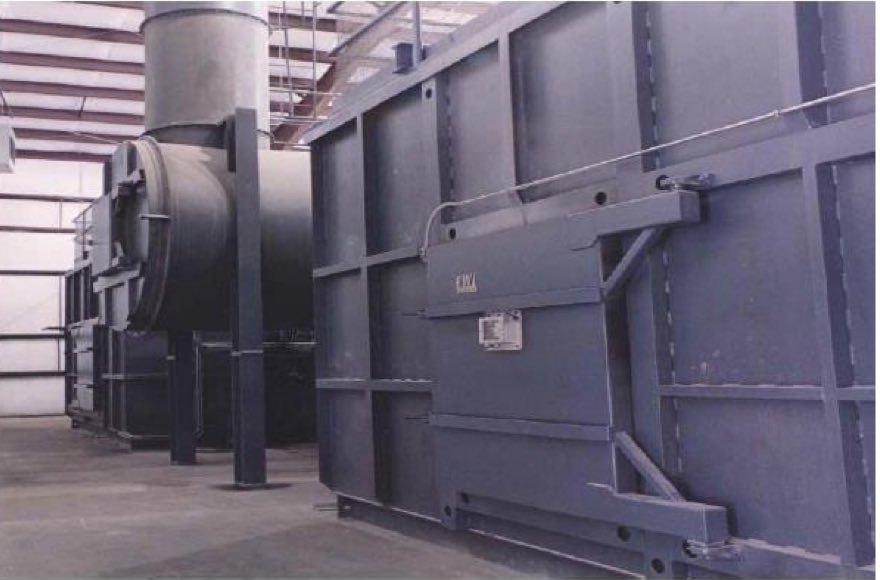
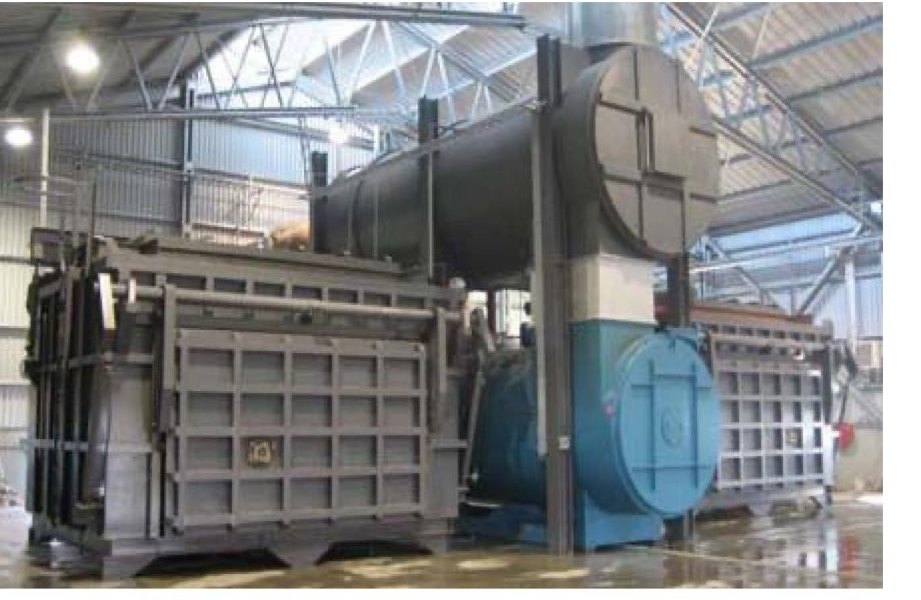
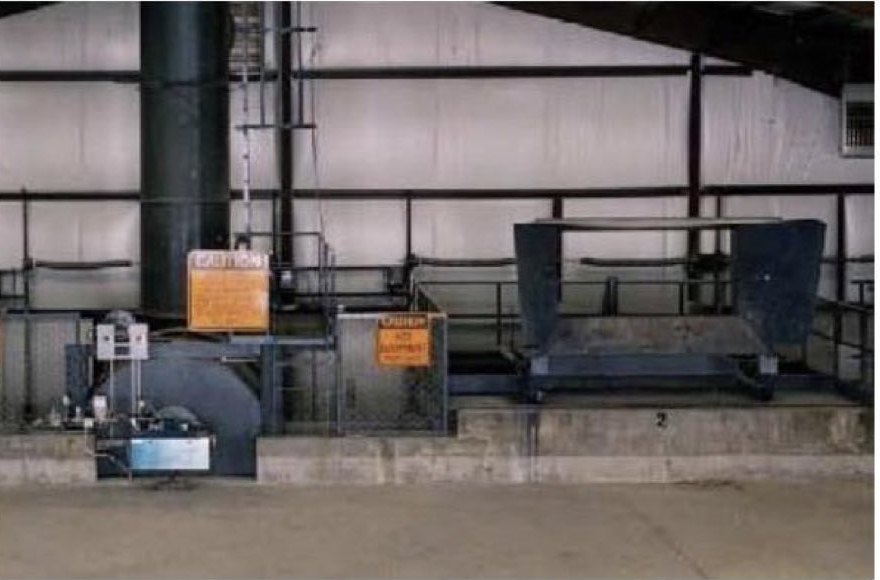
Reference plant: 54 MW thermal, 12 MW electricLayout of a waste-to-energy plantSMOX modules in seriesInstalled SMOX cellOxidizer and boilerLoading section
Featured application · Correctional Facilities
The prison that never lets its garbage out — and heats itself with it
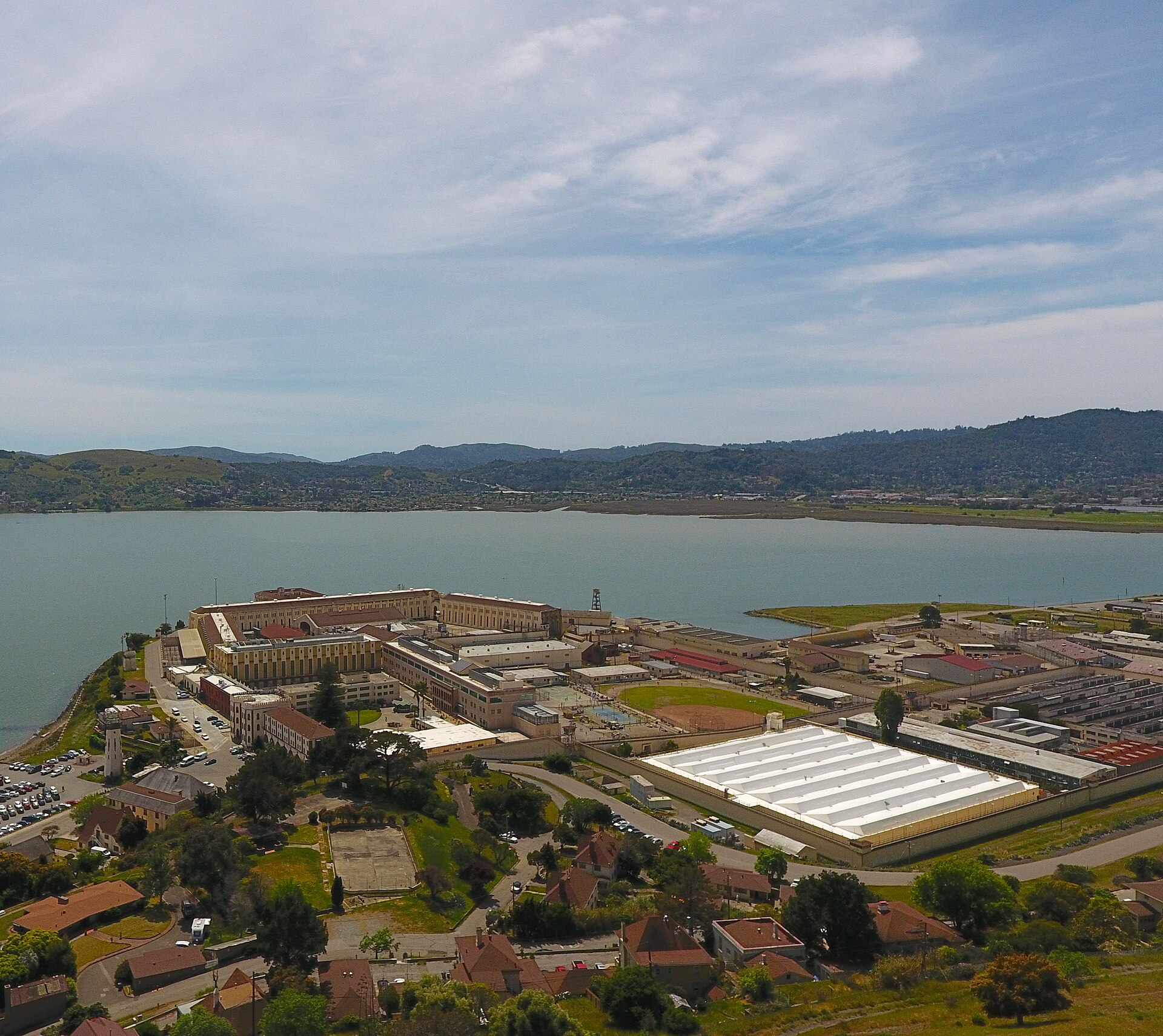
Perimeter security, zero odours, medical waste treated on site, hot water and electricity from waste and a greenhouse where inmates grow their own food: the page dedicated to correctional facilities, with a demonstration example on a facility like San Quentin.
The Hexagon model starts from one principle: nothing goes to landfill. The CONVERTER® turns waste into solid recovered fuel (SRF), SMOX turns it into heat and electricity, metals go back to industry and the inert ash becomes mineral material. In a landfill, biodegradable waste releases methane — a greenhouse gas 23 times more potent than CO₂: recovering energy from waste avoids, according to the IEA, about 1,982 kg of CO₂ per tonne used to produce electricity.
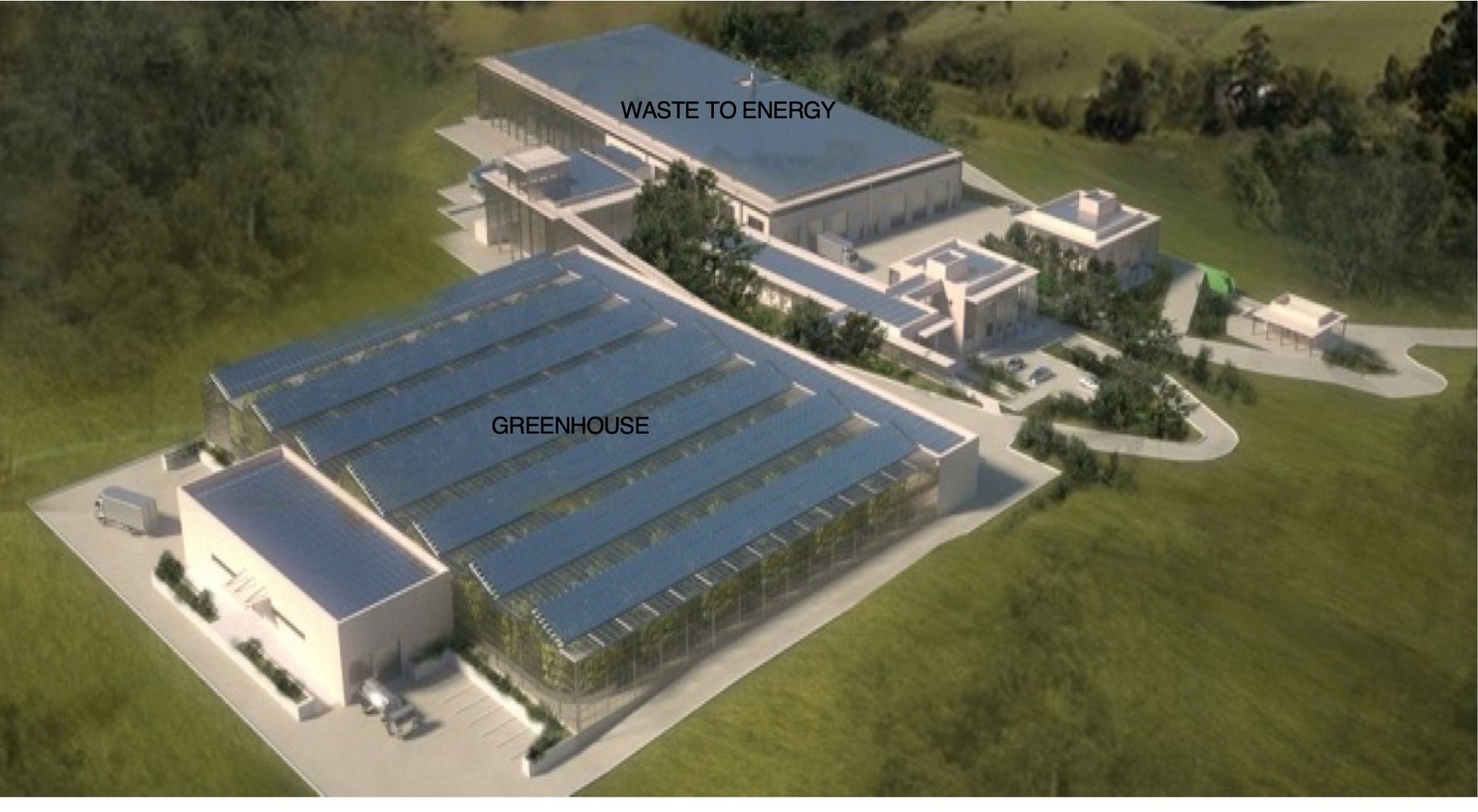
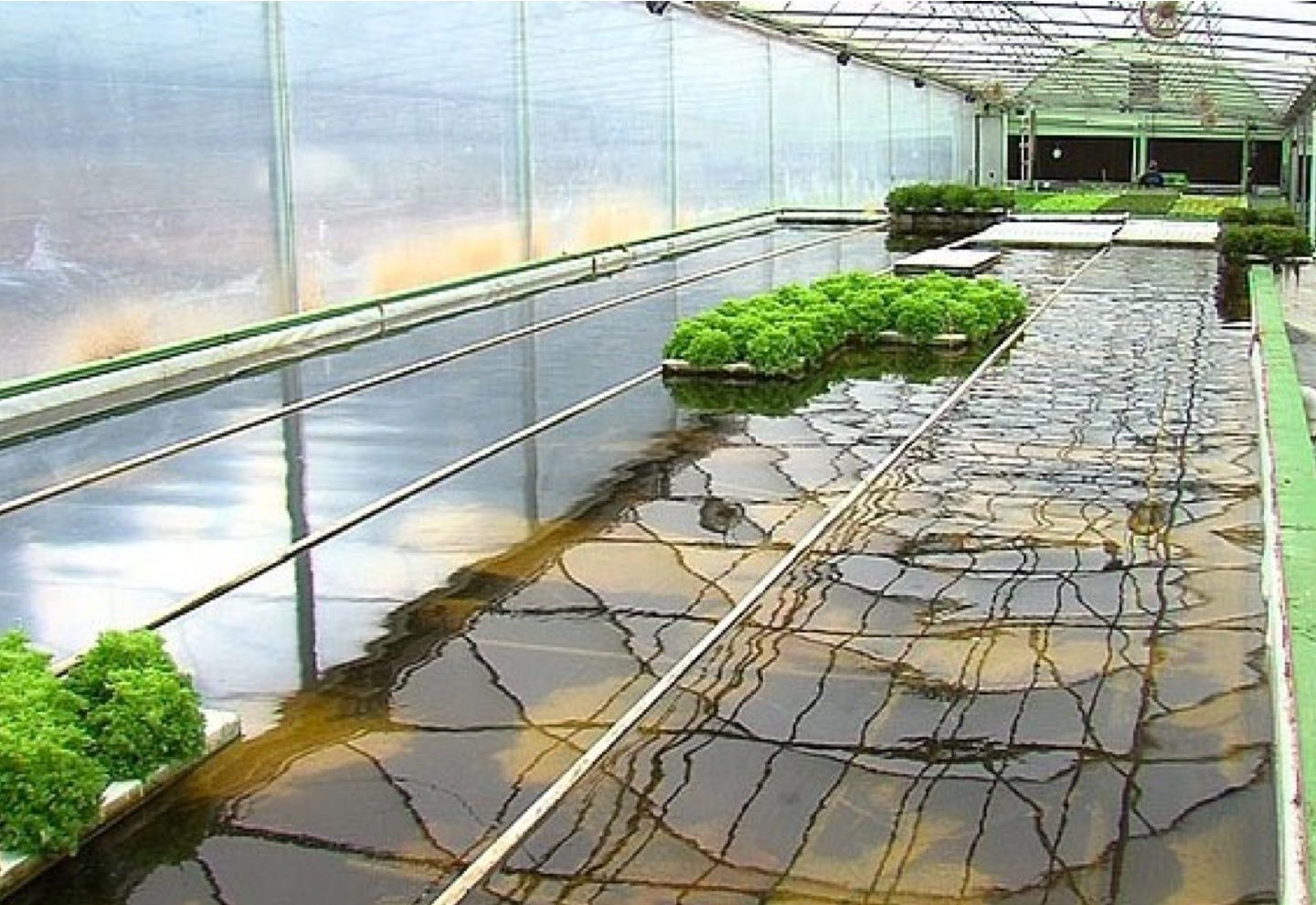
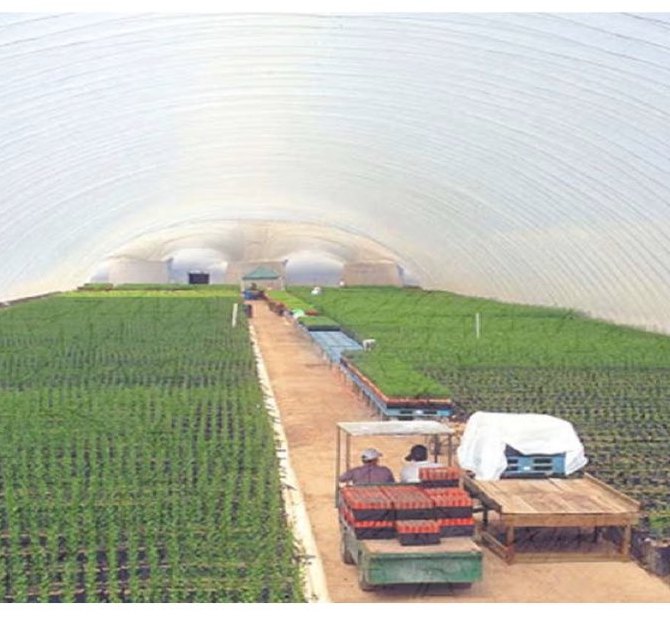
The Hexagon plant: waste-to-energy unit and greenhouse side by sideAquaponic greenhouse: vegetables and fish with the plant's waterPressostatic climatized greenhouse: growing all year round
94%solid fuel
5.5%metals recovered
0.5%PVC separated
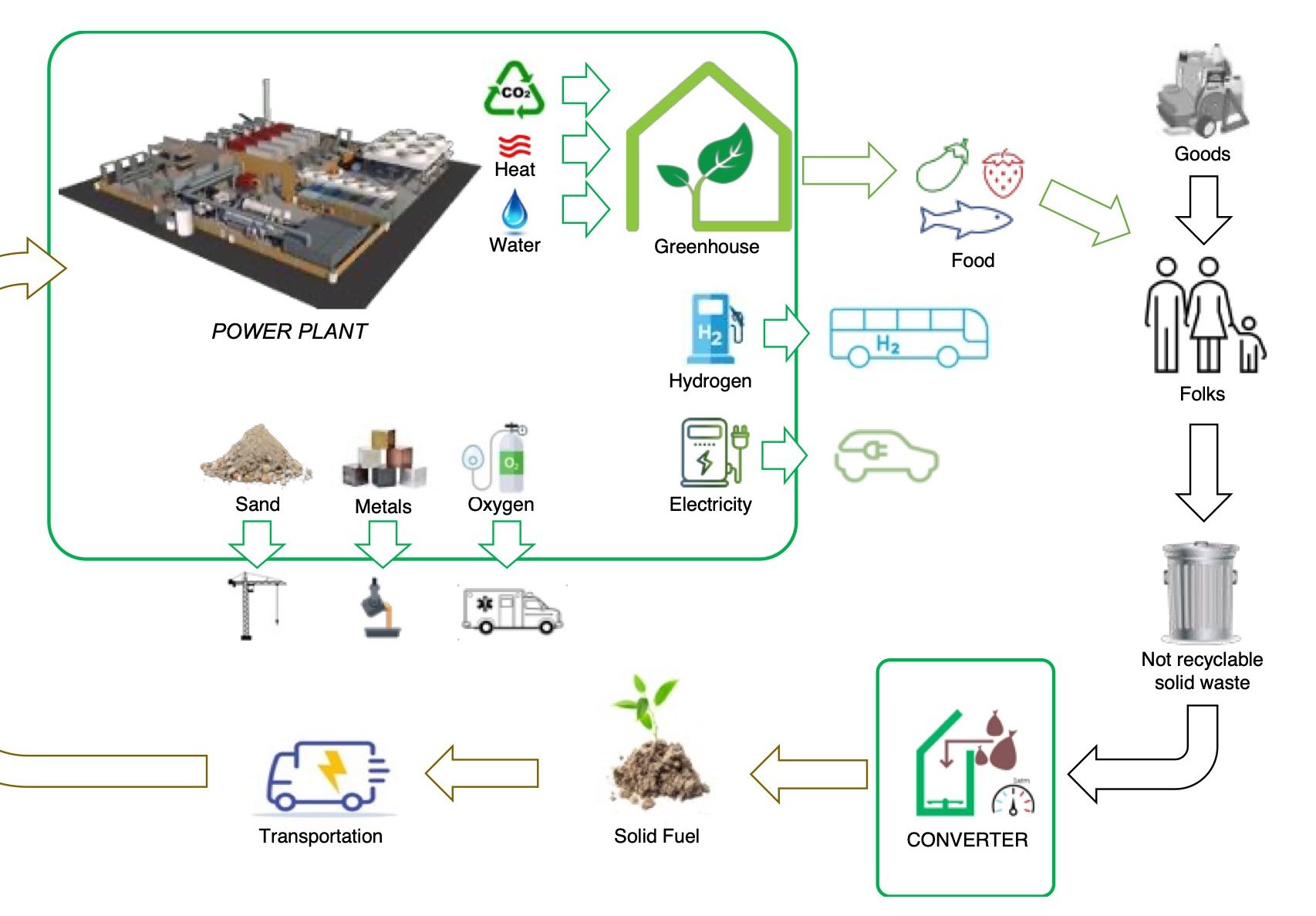
Around the plant a territorial circular economy can be built: heat, CO₂ and water feed controlled-atmosphere greenhouses; electricity produces hydrogen for transport and oxygen for hospitals. One plant, several products, less money flowing out of the territory.
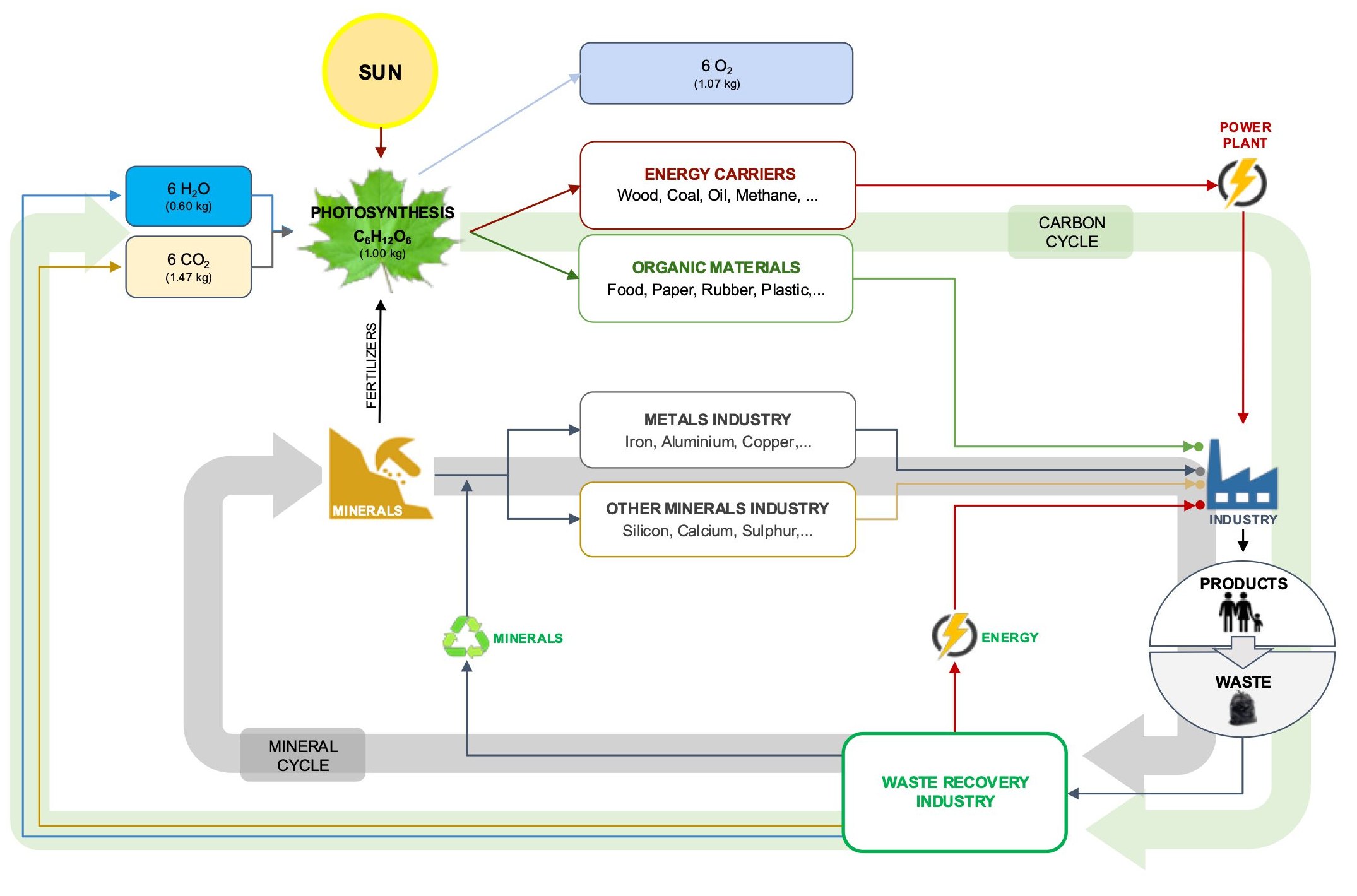
The Hexagon model: non-recyclable waste enters the Converter and becomes solid fuel for the power plant; the plant returns heat, CO₂ and water to the greenhouse (food), electricity and hydrogen to transport, oxygen to healthcare, sand and metals to industry (Hexagon Technology Ltd diagram)Circular economy basics: carbon cycle and mineral cycle — the waste recovery industry closes both (Hexagon/OMPECO diagram)
Standards, rules and opinions
Designed for Europe, ready for the world
The plant equipment is supplied with a CE declaration of conformity and complies with the design, manufacturing, safety and commissioning requirements in force in the European Union. In particular, the machinery is built in compliance with the following minimum requirements:
Standard / Directive
Subject
Standard ISO 9001:2015
quality management system
Standard ISO 14001:2015
environmental management system
Standard ISO 4413:2010
hydraulic fluid power systems
Standard ISO 13849-1:2015
safety-related parts of control systems
Standard ISO 7010:2019
safety signs
Standard ISO 12100:2010
risk assessment and risk reduction
Standard ISO 14120:2015
design and construction of fixed and movable guards
Standard ISO 11303:2002
selection of protection methods against atmospheric corrosion
Standard ISO 3506-1:2009
mechanical properties of corrosion-resistant stainless steel fasteners
Standard ISO 12944-2:2017
corrosion protection of steel structures
Standard RINA
marine environment quality standards
Directive 2006/95/EC
electrical equipment design
Directive 2006/42/EC
machinery
Directive 2014/68/EU
pressure equipment
Directive 2014/30/EU
electromagnetic compatibility
Directive 2014/35/EU
low voltage equipment
Standard EN 60204-1
electrical equipment of machines
Environmental design references
The plant is designed according to the following European Union and US environmental laws:
Directive 2010/75/EU
of the European Parliament and of the Council of 24 November 2010 on industrial emissions (integrated pollution prevention and control)
Commission Implementing Decision (EU) 2019/2010
of 12 November 2019 establishing the best available techniques (BAT) conclusions, under Directive 2010/75/EU, for waste incineration
Directive 91/156/EEC
on waste
Directive 91/689/EEC
on hazardous waste
US EPA FAR 52.223-4 and FAR 52.223-9
on environmental pollution prevention (United States)
Technical opinions and suppliers
Technical opinions
La Sapienza University (technical opinion) · INDDIGO, France: TRL assessment of the smoldering technology (2022) for Verdè sxm, Saint-Martin, which then obtained the permit to build and operate a SMOX plant
An engineering company specialised in solid-waste treatment plants: recovering, recycling, inerting — in the civil, military and clinical sectors. London · www.hexagon.technology
OMPECO s.r.l.
Process engineering — Italy
Home of the CONVERTER®, the first link in the chain: from waste to solid fuel. Moncalieri (Turin) · www.ompeco.com
Pure Organica Corp.
Representation — USA
Brings SMOX into its portfolio under the 2026 agreement with Hexagon: commercial development, projects and customers in international markets.